
At first glance, these requests seem harmless. They're part of the job. But when hundreds of workplace issues are reported through informal channels every month, organisations lose something extremely valuable: visibility. And without visibility, it is impossible to improve operations strategically.
The problem is how the request arrives. In many organisations, workplace issues are reported through:
These channels feel quick and convenient but they create a major operational challenge: the issue gets fixed and the data disappears.
1
Nobody can measure response times.
2
Nobody can see recurring trends.
3
Nobody can identify root causes.
4
Everyone is working harder, but the
organisation isn't learning

It's not just anecdotal. Many teams are still logging issues through spreadsheets, paper work orders, and email threads that never make it into a consistent system of record. The data exists, but is just not usable.
Imagine a facilities team receives five requests about a faulty meeting room screen over several weeks.
The organisation doesn't have five problems. In reality, it is one recurring asset problem but without structured data it appears random. Each request is handled through a quick conversation, the issue gets temporarily fixed, and the next week the same problem returns. Because requests were never captured properly, the pattern remains hidden.
And these are just the requests that people have made; how many people have been affected and haven't reported it?
This is how small operational inefficiencies become long-term costs.
The best facilities teams see requests as operational intelligence instead of interruptions.
A request can tell you:
1
What is going wrong
2
Where it's happening
3
Who or which team is affected
4
How often it's happening
5
How quickly it's being resolved
6
Whether the solution was effective
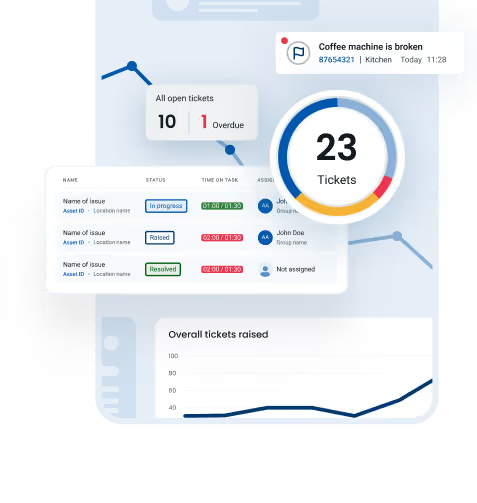
When those signals are captured consistently, they become more than tickets. They become a dataset you can analyse. Patterns emerge: recurring faults, underperforming assets, teams repeatedly impacted, and service providers who underdeliver. From that dataset you can prioritise capital spend, optimise maintenance schedules, measure vendor performance, and improve occupant experience. In short: logged requests let you move from firefighting to strategic FM.
So as a result, you gain valuable insights into:
That's what turns a helpdesk/request platform from an administrative tool into a Workplace Experience intelligence layer.
When every issue is logged, organisations gain a clearer understanding of where resources are being spent and where improvements should be made.
Facilities management is becoming increasingly data driven. Leadership teams want visibility into:
None of these insights are possible when requests live in scattered conversations.
There is a widening gap between organisations that can turn facilities data into decisions and those still relying on scattered, unstructured records; structured data is the dividing line. A structured reporting process transforms workplace requests from isolated events into valuable operational intelligence.
A better process doesn't have to be complicated. Employees and users of the space, from the CEO to the cleaner, visitors and VIPs should be able to report an issue quickly, while the organisation captures the information needed to manage it properly.
Hereworks Solve gives occupants a simple way to report workplace issues without downloading an app or logging in.
By allowing anyone anywhere, at any time, to request support, raise an issue or report a fault, fast, anonymously and with immediate location identification and issue allocation, the request becomes part of a structured workflow. The right team gets notified and requests can be automatically routed to the appropriate user group, helping cleaning, maintenance, facilities or other teams respond without relying on manual forwarding or corridor conversations.
The issue becomes visible. Every request creates a record that can be tracked through to resolution. Managers can see tickets on dashboards and floorplans, monitor response and resolution performance, and identify SLA issues.
The pattern becomes visible too. Heatmaps, ticket analytics and AI-powered insights help facilities teams identify recurring problems, problem areas and operational inefficiencies that are difficult to spot when requests are scattered across emails, Teams messages and conversations.
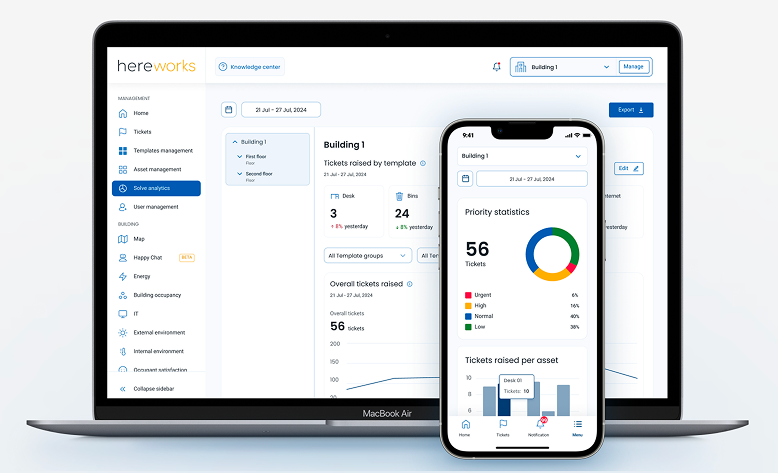
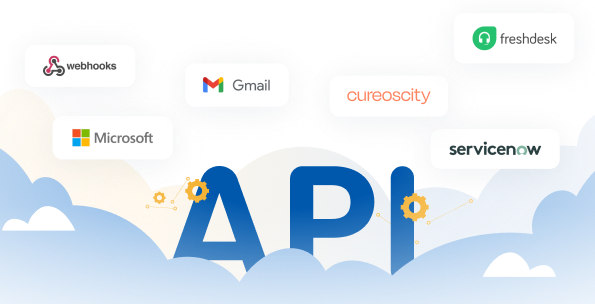
Solve can easily integrate into CMMS, helpdesk or building management systems teams already rely on or run entirely on its own, so it fits the way any organisation already works rather than adding another system to manage.
That's the real difference. A “Can you just…” request no longer has to be an isolated interruption. It becomes a piece of operational data. Over time, those individual requests build a picture of what is happening across the workplace: which assets generate the most problems, where issues are concentrated, how quickly teams respond and where recurring problems may require a more proactive solution.
The goal isn't simply to resolve more requests. It's to learn from them.
And that's how facilities teams can start moving from reactive issue handling to more informed, proactive workplace management.


The way the tenant experience in a building is managed matters more than many landlords realise.

How informal workplace requests create invisible work for facilities teams and hide the data needed

How a global financial services firm transformed workplace management and discovered problems.
The way the tenant experience in a building is managed matters more than many landlords realise.
How informal workplace requests create invisible work for facilities teams and hide the data needed
How a global financial services firm transformed workplace management and discovered problems.